
This essay reflects on the renovation of the SiDe Chen Family House as a way to explore a design attitude centered on restraint, sensitivity to context, and minimal intervention. Instead of aiming to capture attention through expressive form-making, our intention was to let architecture fade into the background—to serve daily life without dominating it. The goal wasn’t to be seen, but to exist with clarity and appropriateness, in conversation with the site’s existing memory and structure.
This isn’t an abdication of design responsibility—it’s a reorientation toward the long-term relationship between architecture and its occupants. We tried to respond to the actual conditions of the building, as well as to its emotional and temporal layers. Within this frame, design becomes a process of editing, not accumulation. It becomes a pursuit of what feels sufficient and grounded.
We believe architecture doesn’t need to overhaul everything to assert itself. What matters is whether it can read the existing order of a place, sense its atmosphere, and locate a precise point of entry. If design is a conversation, we’d like our voice to be measured, steady, and attuned to the tone already present.
What the site reveals often exceeds what can be drawn.
The client’s family held varied views about how much of the old house should remain, and how much should change. We didn’t see this as a problem to resolve, but as a kind of productive rhythm that shaped our decisions. By positioning preservation and transformation side by side, we searched for a design language that could accommodate memory while adapting to current needs. That language didn’t come from a stylistic template, but from on-site observation, measurement, and trial.
Early visits revealed a structure that, while aged, still had strength and remarkable daylight. That led us to maintain its spatial logic, rather than overhaul the layout. We also noticed that much of the family’s attachment came from circulation patterns and the arrangement of furniture. Continuity, not novelty, became the design’s foundation.
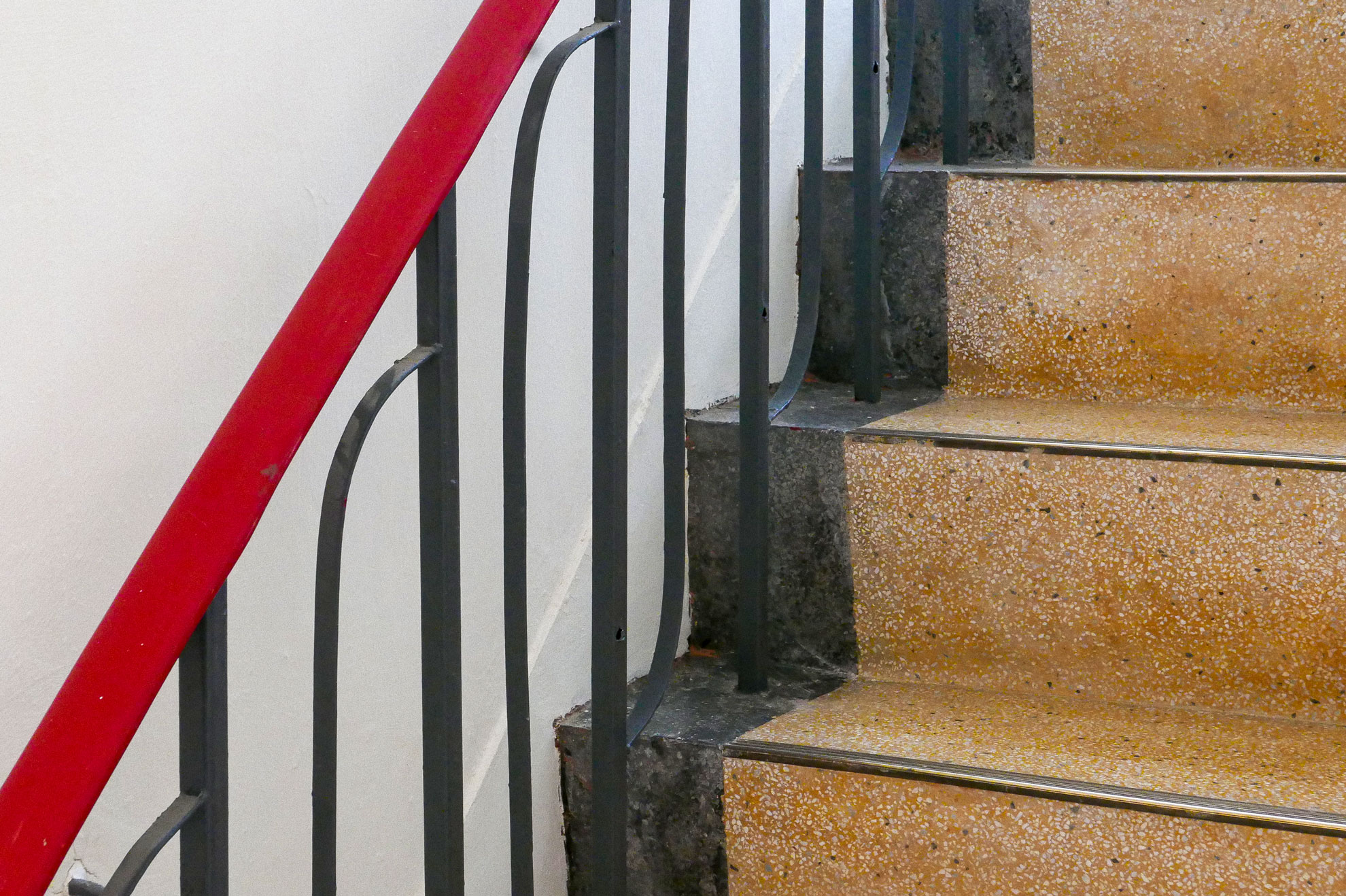
One turning point came with the decision to retain the original stair. Made of terrazzo, bent metal railings, and a red rubber handrail, it contrasted starkly with the updated palette—but it held a unique presence in the family’s everyday life. We kept it intact, designing carefully around it, letting it settle into a new spatial context. Rather than smoothing over the differences, we allowed the contrast to remain—letting the stair carry the weight of temporal depth and a more inclusive architectural tone.
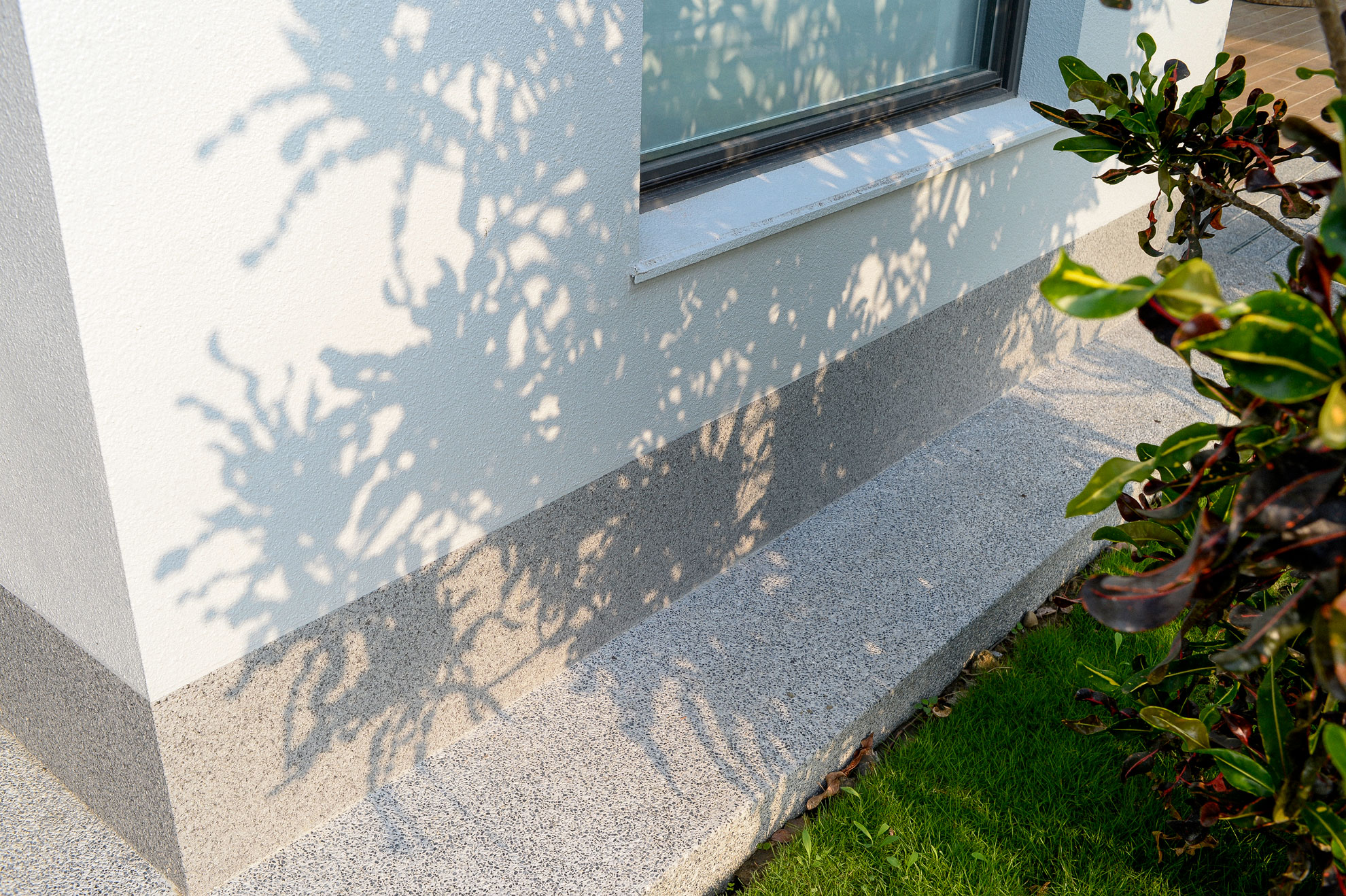
Other interventions were designed to be quiet yet deliberate. A faux-stone finish was applied to the base of the facade and matched to a band of pebble-finished drainage that circles the house. Custom drainage grates were filled with matching pebbles. These choices weren’t about creating visual impact; they were practical responses to wear, water, and time. Together, they helped form a coherent and composed edge condition, while staying understated.
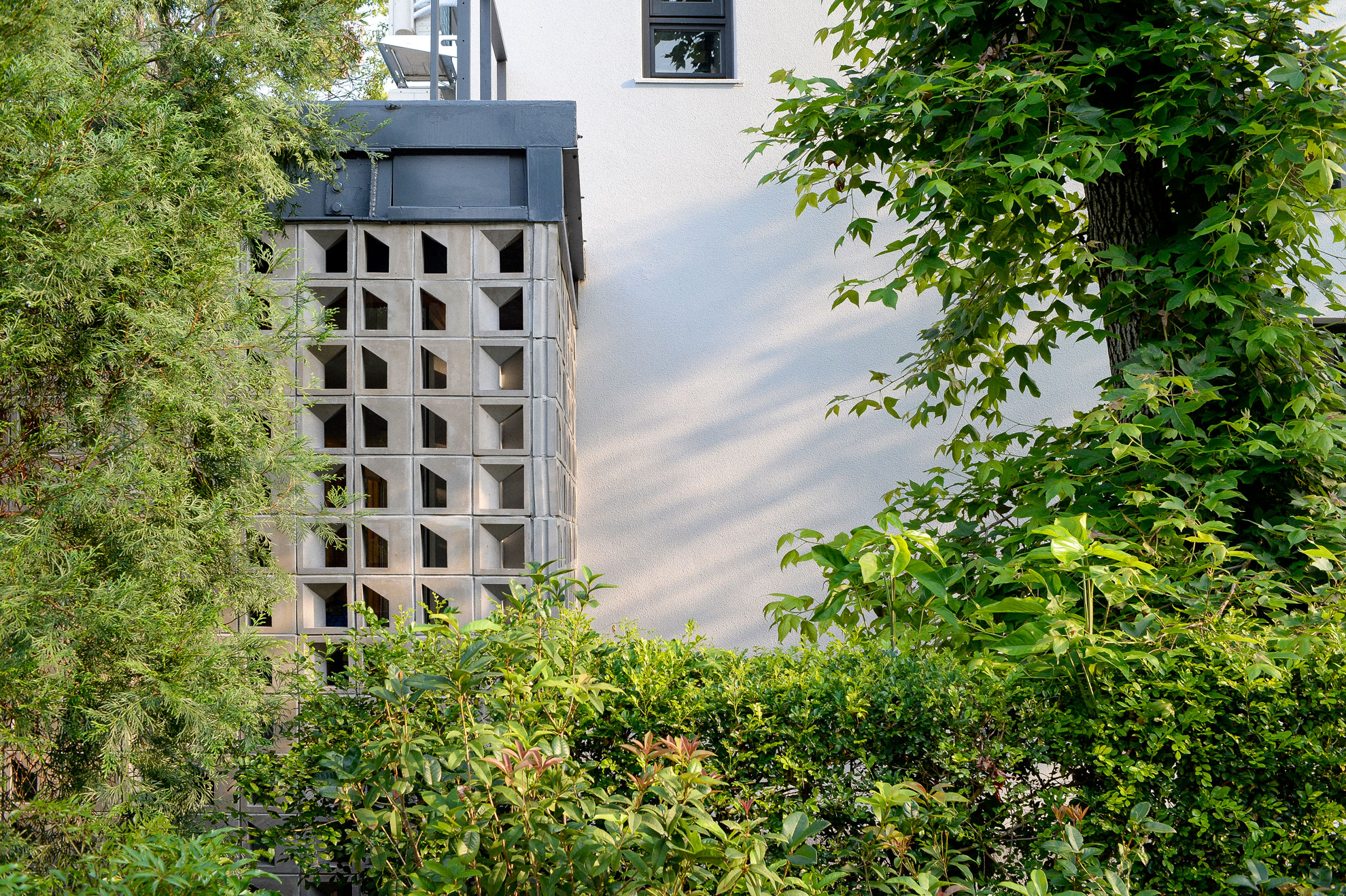
In a neighborhood where renovations often rely on new finishes, claddings, and surface graphics to signal transformation, these restrained adjustments took a different path. We tried instead to integrate elements like grates and lighting into the broader structure of the facade—folding them into the architecture rather than tacking them on.
These elements don’t stand out. They aren’t meant to. But they are what hold the design together. Their effectiveness depends on a shared patience—a willingness, on both sides, to trust that good architecture doesn’t always need to show itself. We’re grateful for the time and space this project allowed for that kind of mutual trust and ongoing dialogue.
The quietest gestures often hold the most weight.
This project reminded us of something simple but easily overlooked: that architecture can step back. It can become supportive rather than central, providing a stable ground for life to unfold. The kind of language we’re searching for here isn’t immediate or iconic—it’s rhythmic, proportioned, and open to slow recognition over time.
We’ve come to see that choosing not to insist is a form of insistence. It’s not about stepping away from authorship, but about letting presence emerge from balance, durability, and fit. Architecture like this may not command your attention on first encounter—but over years of use, it begins to feel inevitable.
This isn’t a universal solution. It’s simply a way of working we believe in. And if you’ve ever lived in a space that quietly holds your life together, then you already understand what kind of design this is.